Wallboxes and EV Charging Stations: LVD and EMC Testing According to EN IEC 61851
What does EN IEC 61851 require for the electrical safety and EMC compliance of charging infrastructure?
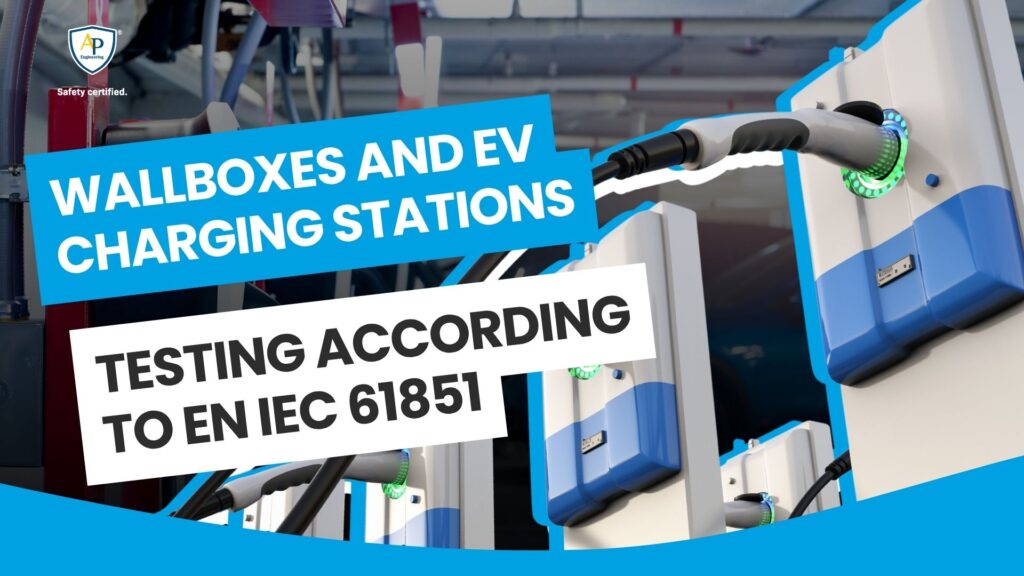
The electric vehicle charging sector is experiencing rapid growth, both in the residential wallbox segment and in the public fast-charging infrastructure market. This expansion is bringing increasing attention to an aspect that is often less visible to the public but crucial for manufacturers: the regulatory compliance of conductive charging systems, an essential requirement for accessing the European market and obtaining CE marking.
Two standards within the EN IEC 61851 family represent the primary reference for those involved in the design, manufacturing, or certification of wallboxes and charging stations: EN IEC 61851-1:2019+AC:2023 and EN IEC 61851-21-2:2021. Although both standards address conductive charging systems for electric vehicles, they cover distinct yet complementary aspects.
EN IEC 61851-1: General Requirements and Electrical Safety
The Cornerstone Standard for Design
EN IEC 61851-1 is the reference standard for the design and assessment of charging systems. It defines the functional, electrical, and safety requirements that charging equipment must meet, starting from the four charging modes defined by the standard:
- Mode 1, Mode 2, Mode 3 and Mode 4
- Each characterized by specific connection configurations and protection levels
The standard specifically addresses:
- The operation of the Control Pilot (CP) and Proximity Pilot (PP) circuits, which manage communication and ensure safe interaction between the vehicle and the electric vehicle supply equipment (EVSE)
- Protection against electric shock hazards
- The operating and environmental conditions under which the equipment must guarantee safe performance
EN IEC 61851-21-2: EMC Requirements for Off-Board Charging Equipment
If Part 1 answers the question “how should a charging system operate and how safe should it be?”, EN IEC 61851-21-2 answers an equally important question: how electromagnetically compatible a charging system must be with the environment in which it operates.
Scope of Application
This standard specifically applies to charging equipment installed outside the vehicle:
- AC charging stations operating in Mode 3
- DC fast charging stations operating in Mode 4
- Wallboxes and fixed charging infrastructure
With operating voltages of up to 1000 V AC and 1500 V DC. The standard establishes electromagnetic emission limits, immunity requirements, EMC test methods, test configurations, and performance criteria during testing.
Two Testing Paths, One Goal: Compliance
To market a charging station in Europe, compliance with both standards generally needs to be demonstrated:
- EN IEC 61851-1, covering functional and electrical safety aspects
- EN IEC 61851-21-2, covering electromagnetic compatibility
These are two separate testing paths, carried out using different methodologies and instrumentation, yet both are essential for building a robust technical file in support of CE marking.
The Role of an Accredited Laboratory
AP Engineering operates as an ISO/IEC 17025 accredited laboratory for electrical safety (LVD) and electromagnetic compatibility (EMC) testing, supporting manufacturers in the EV charging sector in verifying compliance with EN IEC 61851-1 and EN IEC 61851-21-2.
ISO/IEC 17025 accreditation ensures that testing is carried out according to internationally recognized procedures, within a quality management system subject to independent assessment. For wallbox and charging station manufacturers, this translates into a more robust technical file and a more reliable conformity assessment process.